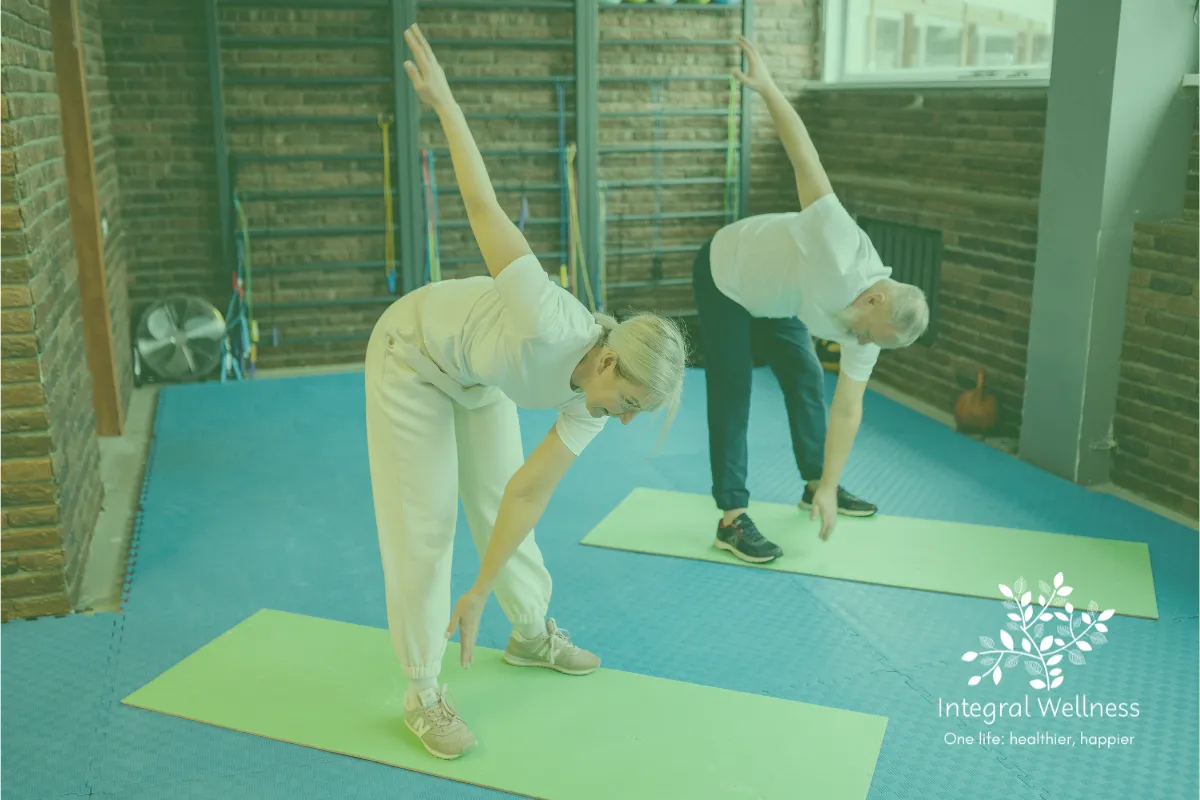
Why Mobility Matters More Than Stretching As We Age
Many people believe stretching is the key to staying mobile as they get older.
Stretching helps, but mobility is often the more important factor for healthy movement after age fifty.
Mobility refers to the ability of a joint to move freely through its full range of motion while maintaining strength and control.
This matters because flexibility alone does not guarantee that a joint will move well or feel good during daily activities.
A person may be able to stretch their hamstrings yet still struggle to squat comfortably or reach overhead without discomfort.
In those situations the issue is limited mobility and poor muscular coordination, not a lack of stretching.
Why mobility decreases as we age
One reason is inactivity. Long periods of sitting tighten muscles and connective tissues.
The hips become stiff, the shoulders lose range of motion, and the spine becomes less capable of rotating and extending.
Muscle weakness is another contributor. When the muscles around a joint are weak, the body often limits movement to protect the joint. This leads to stiffness, discomfort, and reduced confidence in movement.
Over time these changes make everyday tasks harder and create a sense of being less capable in the body.
How we can reverse those patterns
Mobility training helps by combining movement, strength, and control.
Instead of simply holding static stretches, mobility exercises encourage joints to move actively through their natural range of motion.
Examples include controlled hip circles, shoulder rotations, deep squats, and gentle spinal mobility drills.
These movements improve joint lubrication, stimulate connective tissue, and strengthen stabilizing muscles.
For adults over fifty, consistent mobility training offers major benefits.
It reduces stiffness, improves posture, and lowers the risk of injury. Many people also notice that daily tasks feel easier when their joints move properly.
Reaching overhead, tying shoes, looking behind while driving, and getting in and out of a chair all require healthy joint mobility.
Mobility enhances strength training
When joints move well, muscles can work more effectively. This means strength exercises can be performed safely and with better results.
Another advantage is that mobility training does not require a large time commitment.
Even five to ten minutes per day can create meaningful improvements. The key is consistency.
Simple routines that include hip mobility, thoracic spine movement, and shoulder mobility can help maintain comfortable movement patterns for years.
When the joints move smoothly and the muscles support them well, the body feels capable and strong. For many adults, mobility becomes one of the most valuable habits for long-term health and quality of life.
