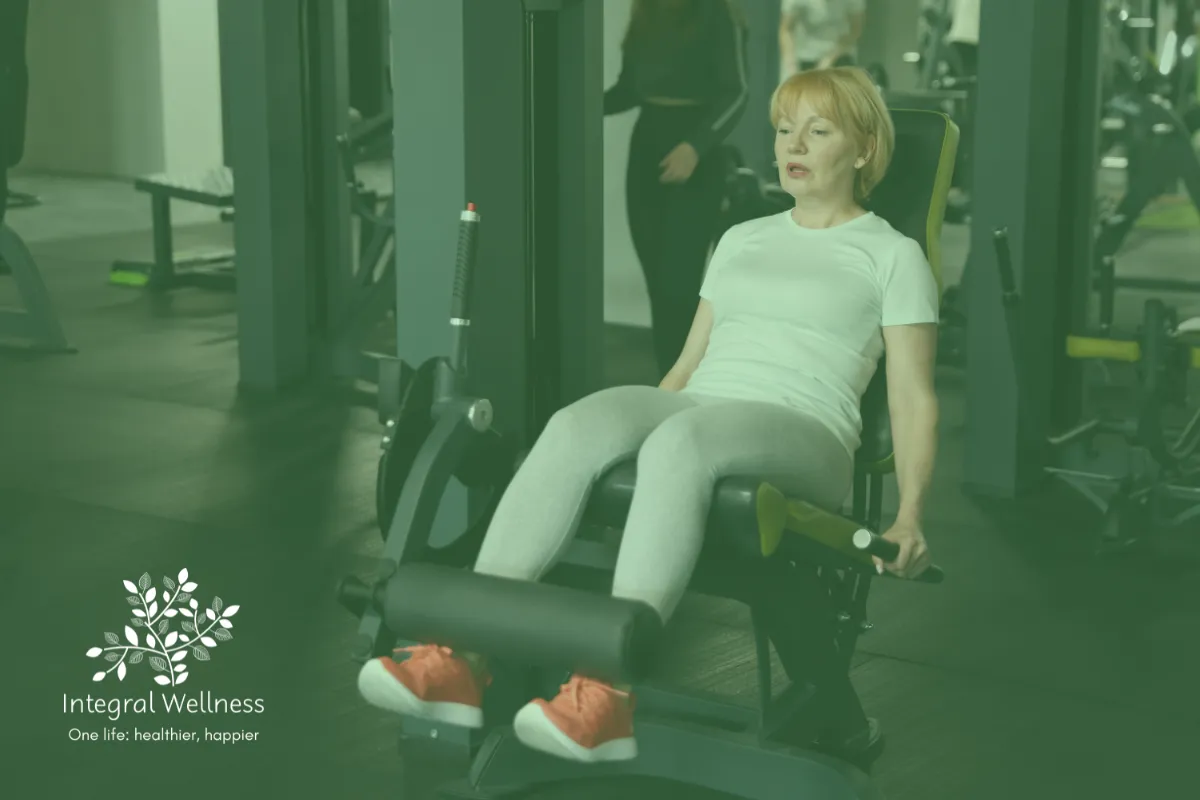
Why Leg Strength Matters More After 60 Than It Did At 30
Most people rarely think about their leg strength until everyday tasks begin to feel harder.
Climbing stairs requires more effort.
Getting out of a chair takes longer.
Walking long distances becomes tiring.
These changes are often blamed on aging itself.
Age certainly plays a role, but loss of leg strength is often a major contributor.
Every time you stand up, walk, climb stairs, carry groceries, or get up from the floor, your legs are doing the work.
When those muscles become weaker, everyday life becomes more challenging.
The Hidden Effects of Muscle Loss
Muscle naturally declines with age through a process known as sarcopenia.
Without regular strength-focused activity, adults can lose significant amounts of muscle over time.
The effects are not always obvious at first.
Many people adapt gradually.
They avoid stairs when possible.
They sit more often.
They stop participating in activities they once enjoyed.
The decline happens slowly enough that it can be difficult to notice until limitations become significant.
Many falls occur because a person lacks the strength to recover when they lose their footing.
A strong lower body helps the body react quickly and maintain control.
This becomes especially important when walking on uneven ground, navigating icy conditions, or stepping off curbs.
Strength Builds Confidence and Independence
Leg strength also contributes to confidence.
People who feel strong are often more willing to stay active.
They walk more.
They travel more.
They participate in social activities.
They continue doing the hobbies they enjoy.
Confidence encourages movement, and movement supports health.
The relationship works both ways.
The benefits extend beyond physical function.
Individuals with greater strength often maintain independence longer and experience fewer limitations in daily activities.
That independence is valuable.
Travel comfortably.
Get down on the floor and back up again.
These abilities influence how people experience daily life.
Building Stronger Legs Doesn't Have to Be Complicated
One common misconception is that maintaining leg strength requires intense workouts or heavy weights.
That is not the case.
Many effective exercises use body weight, resistance bands, or light external resistance.
Exercises such as sit-to-stands, step-ups, supported squats, and lunges can all help build and maintain strength.
What matters most is consistency and progression.
The muscles need a reason to stay strong.
They respond to challenge.
When muscles are rarely challenged, the body gradually reduces its investment in maintaining them.
This is one reason strength training is so valuable.
Walking is excellent for overall health.
It supports cardiovascular fitness and encourages movement.
However, walking alone may not provide enough resistance to preserve muscle mass and strength as effectively as targeted strength exercises.
A combination of walking and strength training provides the best of both worlds.
Strong Legs Support Healthy Aging
Strong legs also support healthy joints.
The muscles surrounding the knees and hips help absorb force and stabilize movement.
When these muscles are strong, joints often experience less stress during daily activities.
This can help people move more comfortably and confidently.
The body remains remarkably adaptable.
The key is starting where you are and progressing gradually.
There is no need to compare yourself to others.
The goal is to maintain the physical abilities that allow you to live the life you want.
This week, pay attention to how often your legs help you throughout the day.
Every step, every stair, every walk, every time you stand up from a chair relies on strength.
The more we appreciate those everyday movements, the easier it becomes to see why maintaining leg strength deserves a place in any healthy aging plan.
Join Us for Wellness Hour
If you’d like some support, you’re welcome to join our free weekly online group call every Thursday at noon. It runs for one hour and is open to everyone.
A coach is available throughout the session to answer questions, guide you, and help you find clarity with your health and wellness goals.
To get the link, just send an email to [email protected] and we’ll make sure you’re added.
